Summary Right to Repair & Consumer Ownership Advocates
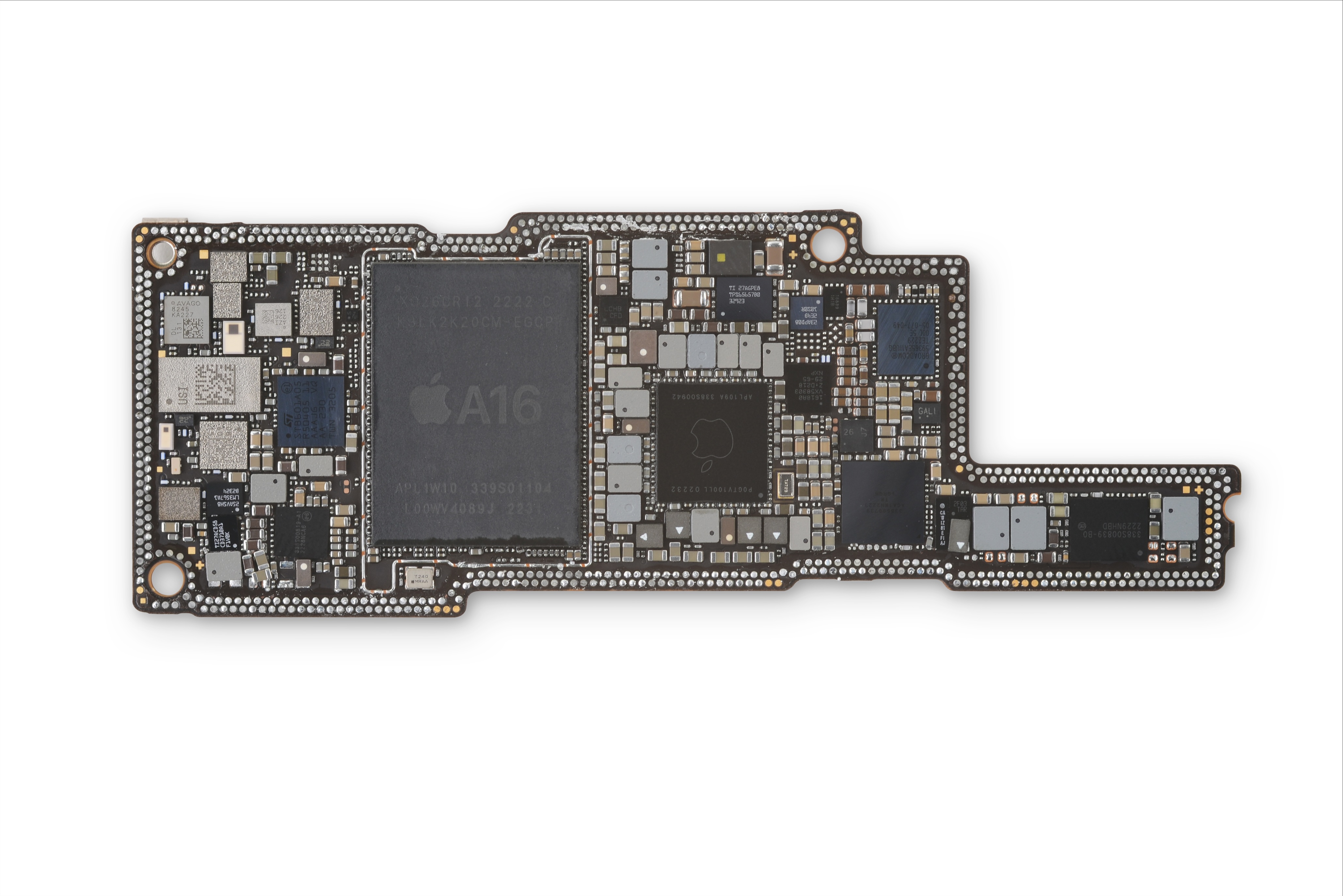
This iFixit teardown article advocates for consumer right to repair by disclosing iPhone 14 internals and features undisclosed by Apple. The page demonstrates strong structural commitment to information access, repair rights, and technical education through accessible guides, community platforms, transparent documentation, and consumer-focused advocacy, though it employs default-enabled behavioral tracking that shifts privacy burden to users.
It's good to see Apple behaving and recognising the momentum the Rights to Repair movement has got globally in the last few years (especially in the large market of EU, and now picking up in Asia). But I think iFixit has been too generous in giving the iPhone 14 a repairability score of 7 out of 10 when Apple still places additional unwanted hurdles and control through software:
> We are hearing reports that Apple is continuing their hostile path of pairing parts to the phone, requiring activation of the back glass after installation. You really shouldn’t need Apple’s permission to install a sheet of glass on a phone that you already own. Using software to prevent the use of aftermarket parts gets a big thumbs down from us. These locks are frustrating and ultimately futile—Apple simply can’t control all the repairs that happen with their products, no matter how hard they try.
Odd article considering everything is still software locked to the phone. Sure it's easier to repair, but if you get your parts from anywhere else than apple's program directly, a lot of features will stop working.
Hugh Jeffreys made a video interchanging parts on two brand new iphone's and it disabled a lot of things including auto-brightness.
There’s speculation that offering the kits is an attempt to head off right-to-repair legislation. But seeing this redesign, I wonder to what degree the repair program is incentivizing repairability within apple’s corporate structure. Now that “profit/loss per self service repair” is tracked in a spreadsheet - does repairability matter more?
Anyways - it’s great to see some improvement here, for whatever motivation.
> We are hearing reports that Apple is continuing their hostile path of pairing parts to the phone, requiring activation of the back glass after installation.
On the other hand, this makes stealing an iPhone more and more pointless, as more and more parts cannot be parted out and sold. After activation lock was added, thieves started parting out screens and batteries to sell them and get at least some value out of an otherwise useless stolen iPhone. Want to see how useless an activation locked iPhone is? Check eBay. I assume that for iP14+ it'll be even less. I welcome this move.
I’m not sure I care much about repairability. For me, makers should have the freedom to design products as they wish. I don’t think that phones and laptops would be as light and portable as iPhones and Macs are if Apple was inhibited by the Right to Repair movement from arranging internal components in such a jampacked way.
I also think that makers should have the freedom to design computers whose software tightly integrate with the hardware. Repairing a broken part with a third-party is exactly the opposite of tight integration. If people didn’t want tight integration, then products that are built specifically for tight integration are just not the right tool for the job that they want to do, and I don’t understand why they can’t simply choose not to buy the product. It’s not like the phone and computer markets are monopolies either. Androids and PCs of all form factors and OSes exist.
It would make more sense to me to call for regulation against pricing abuse for the repairs of tightly integrated products. The Right to Repair movement as it stands just doesn’t resonate much with me, nor do I agree with it, because integrated products that come with everything you need make for great user experiences.
This has got to be one extremely expensive toolchain and supply chain redesign to do, but since they have done it a few times before (instead of incremental changes) I suppose the money department has worked out when it is feasible to do that kind of thing while keeping the people in charge happy.
I'm curious to see if this is a 'test' to see if this doesn't have too many downsides, I imagine ingress area increasing this much might be a point of worry (well, there are flexible seals for that now), and instead of having a one-way stack you now have a two-way stack so tooling and workstations around that (even if we just think in terms of assembly and rework) are going to be a PITA to convert or completely replace.
Either this will be a success and allow for the architectural change to be applied to other products, or it's a medium-success in which this only works for specific parts/antenna/power envelope configurations and we won't see this design in other form factors.
What does itch a little is iFixit whining about the parts needing be a signed set to work together. Nobody has come up with a better integrity protection method, and no-protection isn't an option either for the ecosystem. Besides, instead of having a 'safe' and 'unsafe' option for which practically no user will ever be able to make an informed decision, you can simply choose not to buy it if this is a feature you seriously despise.
Apple Care + is going to become an insane profit center and an absolute no brainer when purchasing a new Apple device.
This puts Apple’s recent “no limit to accidental repairs” policy update in perspective. When I saw that I said, “well I guess this is how they are going to use their cash reserves, because no way will this be net profitable”
To boot, I always wondered why it was so cheap - $200 for AC+ then $29 per screen or back replacement. When considering the employee time and equipment, that’s absolutely a loss.
As someone that just wants good things in the world, this makes my heart flutter. It’s wonderfully aligned with customers and does good for the bottom line.
Sorry to all my fellow repair brethren still slogging it out there. Accuse me of being a fanboy - but this is amazing.
[Edit]: This may potentially eat into the phone case market as well. The feel of a bare iPhone is that much better and you can put the cost of the case toward AC+.
>Apple has completely redesigned the internals of the iPhone 14 to make it easier to repair HN: <crickets>
Easier for who? Quote from the video:
"We're hearing reports of Apple continuing on the hostile path of pairing parts to the phone, requiring activation of the back glass after installation. Why in the world would you need permission to install a sheet of glass?! Using software to prevent the replacement of components with aftermarket parts gets a big thumbs-dwon from us."
Let's call it like it is. Apple is not doing you a favor for easier repairability, they're doing their bottom line a favor. If they actually cared, they wouldn't be so hostile to software lock you out of replacing a bloody glass panel.
The internal design is still greatly thought out though. I've been asking myself for years: why can't phone makers make phones with a mid frame that allow both sides to be easily swapped out, instead of one or another. Seems like Apple has cracked it. I hope other phone makers copy this minus the SW locks.
This brings back memories of the Xperia Z1 Compact (+ several later generations) that used this same design of gluing the screen and back glass independently to a mid frame.
Unfortunately they are not good memories. The slightest, barely visible bend or sub-par repair and the back glass would peel up in one corner and coat the underside of the camera in dust and condensation
I’m not sure I would risk buying a phone with this design again. Apple will have to have worked some serious magic to make it strong and robust
Totally speculating here. I wonder if this is preparing for a future where Apple encounters supply issues or pricing pressure caused by environmental and political turmoil. I could see the average lifespan of devices continuing to increase and more people using repair services. It also makes it easier to refurb devices for second hand use.
Really happy to see this write up. I’m probably in the tank, but I genuinely believe that Apple strives to do right by its customers, and to be a good company. it’s not a nonprofit, and I don’t expect them to act like one.
Sometimes I feel like people enjoy piling on because they are the big
dog.
Again, please don’t mistake this comment for a blindness to some of its operations. But it’s nice to see them get credit for the good stuff.
> Forget satellite SOS and the larger camera, the headline is this: Apple has completely redesigned the internals of the iPhone 14 to make it easier to repair.
This made me chuckle. I'm willing to bet that the overwhelming majority of users care far more about the camera than the repairability. The latter is hardly even something they consider. It will probably help them in unseen ways, like improving resale value.
> Forget satellite SOS and the larger camera, the headline is this: Apple has completely redesigned the internals of the iPhone 14 to make it easier to repair.
I find this line hilarious because it's an example of law of the instrument[0]. iFixit and other activist repair shops treat these devices as if their(the iPhones) purpose is getting a repair and all this talk over they years about iPhone repairability was from that standpoint.
I'm happy that Apple is making the new iPhones easier to repair but I never in my life purchased a brand new device with intention or plan to repair it. Why would anyone try to sell me a device by talking about how easy it is to repair it? What I expect is that it would never need a repair and if it needs a repair the vendor will handle it. Also, iPhones were always the easiest phones to repair because specialists who repair iPhones could be found on every corner. Every repair shop repairs iPhones, so repairing an iPhone was never a real issue but something that repair nerds like to speculate on. It's almost as if the happiest they could have been if Apple shipped the iPhones broken but easy to repair using some cheap generic part.
I had my iPhones replaced, repaired or self services by buying the parts online through the years. It's no accident that iPhones always were best at retaining second hand value.
I have replaced screens an a couple different models of Motorola phones, and the screens popped off the front. Just looking at my Pixel 5a, the screen clearly pops off the front.
This wouldn't bother me as much, except it is on the ifixit web site, which posts videos on screens repairs, that clearly show any number of Android phones being opened from the front.
I mean yeah, it is nice to be able to open it from front and rear. But what good does it make when they pair every single component to the motherboard? Yeah, technically parts are more accessible (physically) but thats only the beginning of the repair process. And unless you can buy genuine parts without hassle and put them in, you are still SOL.
To me it is like cheering that murderer did not also litter I mean I guess it is kinda nice of him, but...
On our product (air quality monitor[1]) we made the concious decision to design it for long life and repairability by e.g.:
- using no glue or snaps
- all components on one PCB, no thin cables that can break
- standard philips/torx screws
- four screws to open the enclosure, four screws to take out the pcb
- expensive sensor modules on pin sockets for easy reaplacement
- only using components that are certified for longe lifetime -even if they cost a few dollars more (e.g. DC to DC converter)
- not using plastic for packaging and we ask our supplier to not use plastic when sending us the parts (e.g. no bag around the USB cable etc)
We wrote about this [2] and often do presentations for customers and have a slide about this and it gets a great response and I believe gives us an advantage compared to competing products on the market. As the market more and more appreciates this, Apple probably also realized that this can be a competitive advantage and give them positive press.
This makes it easier for my technicians when customers lie by omission when they have had their device repaired someplace else and they bring it back to us for repair. It's not until we get into the repair and find out someone has stripped screws that can't be removed without extraction tools and replaced LSI's.
It's also nice for consumers who get their devices stolen strictly for parts. Preventing someone from basically chop shopping phones. I don't use iphone's but it's a nice feature. If the parts are serialized they could prevent your stolen iphone's camera from working in someone else's stolen iphone. Essentially locking the parts to a iphone that locked by an appleid.
Yeah. If you look at the complete board shots, those chips are inside the sandwich of PCBs. So yeah, it was probably disassembled in an reflow oven without much care for the components.
Taking all the shielding off those chips is probably what destroyed the board. Without doing that though, these images would just have all the chips covered by shielding metals/alloys.
That goal could presumably also be accomplished by enabling the owner to check a "stolen" box in their iCloud and after that all serialized parts of that phone go on a blacklist. An iPhone checks every day or something if any of it's parts are blacklisted and refuses to work if true.
To prevent a massive attack on Apple by corrupting the blacklist, the phones would only perform this check if any of the factory parts have been replaced.
This does coincide with Apple changing Applecare+ to cover an unlimited number of incidents. Their motivation was simply to streamline their own internal repairs?
Even if that was entirely true, I am fine with regulation leaning on manufacturers to make products that aren't full of soldered ram and storage, glued shut so even their own techs have trouble repairing them, because of the implications for generating mountains of avoidable e-waste. The ability to fix to fix your own gear is just a nice plus of that arrangement, I agree it won't be of use to most people, but it's still a plus.
I think this is kind of a strange position to take when the article is demonstrating you wouldn’t even notice the increased repairability as a consumer. What tight integrations were lost in Apple’s redesign?
Apple has proven with this iPhone (as have other manufacturers) that these goals don't need to be mutually exclusive. You can have wild products designed in all manner of ways (with satellite connectivity!!!), they just need to be user-servicable. That's not an unreasonable request for a company with 200 billion dollars sitting in their R&D coffers.
Right-to-repair regulation isn't about stifling innovation, it's about giving the consumer leverage in the lifecycle of the product they own. Before now, Apple has gone out of their way to make life as hard as possible on third-party repair shops - that shouldn't be an engineering incentive. Regulation gives us the power to force Apple to put consumers before profit margins, and innovation somewhere in between.
> If people didn’t want tight integration, then products that are built specifically for tight integration are just not the right tool for the job that they want to do, and I don’t understand why they can’t simply choose not to buy the product.
This, a million times. I never understand the take “this product is a runaway, worldwide success, and I want to use it as well because it’s by far the best, but I also want various other of my own, individual priorities factored in” in some sort of mythical unicorn product.
And because many of us are hackers/makers/programmers/tinkerers, one of those priorities is the ability to have all of the above, but also unfettered access to the internals to modify it as we please.
It’s like… this car is perfect for my needs in every way, and far and above the best in its class. But I want it to run on hydrogen, so if they could just do that, it’d be perfect. Why are they forcing me to run on electric?
I have been of the same opinion (and I guess I still am, albeit less strongly). However, user wants aside, easily repairable products are better ecology-wise.
I want Apple to be allowed to create any device they want, but I think iPhone and Mac repairability can be currently improved without noticably hurting features. Prioritizing it would be the right trade off to do. In that case they should go for it (as they apparently decided to do).
Even without fighting for regulation, we can still celebrate companies when they decide to create repairable products with long term software support and complain about them when they don't.
A regulation that I would like to see would be to perhaps force 'makers' to sell genuine spare parts to anyone (same goes for Tesla and others).
I disagree that integrity protection is necessary across many components of the phone.
There should be integrity protection on the SoC, and then all other components should be untrusted.
Sure, that means someone can proxy the fingerprint sensor or put on a fake screen that shows a fake consent dialogue. But I think that is an acceptable risk - after all, you can never protect against someone making an entirely new device that just happens to look like an iPhone.
If Apple allows super easy salvage of another device for parts, I wonder if phones will start to be stolen again. Easy salvage might create an unacceptably wide-spread life-safety risk to ALL smartphone owners.
Well I mean it also cuts down on their repair costs quite substantially. Repairing anything but the front screen has been a nightmare since the iPhone 8
Web browsers, like communism, is a red herring. There would be absolutely no point to using alternative browser engines on an iPhone unless they got super special second party access. Not being able to run any downloaded code, no JIT, or extensions would make them useless, and allowing those things effectively breaks the iOS security model. Most obviously with screen time, and parental control, but Apple also disables their JIT in lockdown mode.
I think the sanest compromise would be adopting Firefox, Chrome, and/or Edge as second party browsers. I guess we will see what happens in 2024 because I doubt it will be opening the floodgates.
I've been thinking about a future where deepfakes/AI are more everyday (which is soon).
I can imagine Apple doing some kind of hardware-level signing of camera and video data, so that any image shot by an iPhone/iPad would have a signature declaring that is was not edited by the user in any way. Details on whether RAW or any kind of auto-cleanup could be included.
In other words, a chain-of-custody kind of thing so that images can be asserted as real vs. created by a computer.
Depending on how such a system would be implemented, this would require "real Apple hardware" from the ground up.
That dude is looking for problem when there's none. He starts off the article with this
> For people like me who have little experience repairing electronics, the self-repair setup was so intimidating that I nearly wussed out.
Did he expect Ikea like instruction manual to repair an advanced consumer electronic gadgets? That kit is clearly meant for professional (or at the very least hobbyists) repairers who clearly have experience, and know what they are doing.
To be fair he does call out Apple's recommendation and that this repair kit is better used by experts. I also feel that faced with increased regulation and public scrutiny Apple threw the entire kitchen sink as a cruel joke. I mean that 75pound repair equipment requiring $1200 hold on a card should is a big signal to retail users "do not even dream of attempting repair"
Sort of. You can still buy replacement parts from Apple as part of the repair program. This would, in theory, make repairing the iPhone 14 a lot easier than it has been in the past.
No, this still doesn't mean you can go get the cheapest replacement option you can on Alibaba but the repair is STILL easier, even if you still have to buy from Apple. For certain replacement parts I can see this being important, like anything involved in Face ID or Touch ID.
Credit where credit is due, let's hope it continues in the right direction.
Apple’s Activation Lock lead to a substantial drop in smartphone theft worldwide. That’s something worthy of consideration. Apple must not re-incentivize phone theft to harvest parts.
This design isn't more resilient vs supply chain problems in any obvious way but my guess is the next iPhone SE will be a derivative of the iPhone 14. Lowering repair costs paves the way to Apple offering leased phones and is directly aligned with a shift towards services revenue.
I think he meant that though the redesign is comprehensive an it's basically a different phone from the inside, reviewers still considered it an exact same design externally.
$200 per year plus $30 per repair is still a lot. How often do you smash your phone?
Generally insurance is never positive-EV for the buyer unless peace of mind is considered, and to that I say, it's cheaper to find peace with the risk of breaking your phone.
I think that what you are saying is valid, but this should still be celebrated as a win for consumers. You don't have to see something as all good or all bad.
Editorial Channel
What the content says
+0.50
Article 19Freedom of Expression
Medium Advocacy Framing
Editorial
+0.50
SETL
+0.27
Page title explicitly frames content as disclosure of concealed information ('Feature Apple Didn't Tell You About'), constituting expressive speech counter to corporate information control.
FW Ratio: 60%
Observable Facts
Page title states 'The iPhone 14 Feature Apple Didn't Tell You About', positioning teardown as information disclosure against corporate withholding.
Navigation includes dedicated 'Right to Repair' section under Community.
DCP notes iFixit provides free access to repair guides and information reducing barriers to knowledge.
Inferences
Teardown format constitutes expressive disclosure challenging corporate information monopolies.
Right to Repair navigation indicates structural commitment to access-to-information advocacy as core mission.
+0.35
Article 17Property
Medium Advocacy Framing
Editorial
+0.35
SETL
+0.19
Page title emphasizes device internals ('Feature Apple Didn't Tell You About'), positioning ownership and understanding of physical device property as consumer right.
FW Ratio: 60%
Observable Facts
Page title specifically references device internals ('iPhone-14-vanilla-topdown-internals-banner.jpg').
Navigation includes dedicated 'Teardowns' section.
Store section offers 'iPhone Batteries' and 'Parts' categories with 'lifetime guarantee'.
Inferences
Teardown content validates consumer property ownership rights to understand and inspect owned devices.
Parts availability enables practical exercise of property rights through user-directed repair and modification.
+0.35
Article 27Cultural Participation
Medium Advocacy
Editorial
+0.35
SETL
+0.13
Teardown constitutes scientific reverse-engineering and technical disclosure, making scientific knowledge about consumer products publicly accessible.
Community forum enables peer-to-peer technical learning.
Inferences
Multiple education format types indicate structured commitment to accessibility-focused technical education.
FixBot AI assistant suggests investment in scalable educational support.
Diverse format mix (guides, teardowns, forum, AI) accommodates varied learning preferences.
+0.25
Article 8Right to Remedy
Low Advocacy
Editorial
+0.25
SETL
+0.19
Page title explicitly positions teardown as disclosure mechanism ('Feature Apple Didn't Tell You About'), functioning as consumer protection/remedy for information asymmetry.
FW Ratio: 50%
Observable Facts
Page title states 'The iPhone 14 Feature Apple Didn't Tell You About', framing teardown as disclosure remedy.
Navigation includes 'Answers Forum' under Community section for peer problem-solving.
Inferences
Teardown serves as remedy mechanism for information asymmetry between device manufacturers and consumers.
Community forum structure enables access to justice through peer support and collective knowledge.
+0.20
Article 21Political Participation
Low Advocacy
Editorial
+0.20
SETL
-0.11
Page title and teardown format imply investigative journalism and consumer advocacy participation.
FW Ratio: 50%
Observable Facts
Navigation includes 'Right to Repair' section with description 'Learn about the Right to Repair movement and how to be an advocate'.
Teardown format enables public transparency participation in device evaluation.
Inferences
Right to Repair section explicitly facilitates civic participation in advocacy movement.
Teardown publication model enables democratic participation in technology accountability.
ND
PreamblePreamble
Low Practice
Article content not sufficiently visible to assess editorial engagement with human dignity principles.
FW Ratio: 50%
Observable Facts
Navigation includes 'Skip to main content' link for keyboard accessibility.
Page offers interface in 11+ languages and store locales across multiple regions.
Inferences
Accessibility features suggest commitment to universal information access.
Multilingual interface reduces barriers to information access across diverse populations.
Site implements Google Tag Manager, Facebook pixel, and third-party analytics (Diffuser) with consent-gating. Consent mechanism is present but tracking occurs unless explicitly opted out, shifting burden to user.
Terms of Service
—
No ToS content visible in provided page data.
Identity & Mission
Mission
+0.25
Article 27
iFixit's core mission emphasizes repair rights and access to repair documentation, directly aligned with economic and consumer rights.
Editorial Code
—
No editorial code visible in provided page data.
Ownership
—
Ownership structure not evident from page code provided.
Access & Distribution
Access Model
+0.15
Article 19 Article 27
iFixit provides free access to repair guides and information, reducing barriers to knowledge and consumer information.
Ad/Tracking
-0.10
Article 12
Multiple advertising and behavioral tracking pixels present (GTM, Facebook Pixel, Diffuser). Ad personalization and user data collection enabled by default.
Accessibility
+0.10
Article 2
Page includes skip-to-content link for keyboard navigation and proper heading hierarchy in CSS, indicating accessibility awareness.
+0.40
Article 26Education
Medium Practice
Structural
+0.40
Context Modifier
ND
SETL
-0.20
Page provides multiple educational formats: 'Repair Guides', 'Answers Forum', 'Teardowns', and 'FixBot' AI assistant. Extensive CSS and asset preloading indicates substantial educational content investment.
+0.35
Article 19Freedom of Expression
Medium Advocacy Framing
Structural
+0.35
Context Modifier
ND
SETL
+0.27
Page structure provides free access to repair guides and documentation. Navigation prominently features 'Right to Repair' advocacy section, indicating editorial commitment to information access rights.
Page provides teardown technical documentation and operates store selling iPhone batteries and repair parts, enabling practical exercise of property ownership rights through modification and repair.
+0.25
Article 21Political Participation
Low Advocacy
Structural
+0.25
Context Modifier
ND
SETL
-0.11
Navigation features dedicated 'Right to Repair' subsection with advocacy content, enabling civic participation in repair rights movement.
+0.10
Article 8Right to Remedy
Low Advocacy
Structural
+0.10
Context Modifier
ND
SETL
+0.19
Answers Forum and community support provide structural recourse mechanisms for consumer questions and grievances.
ND
PreamblePreamble
Low Practice
Page structure includes skip-to-content accessibility link and multi-language support, enabling equitable access to information.
ND
Article 1Freedom, Equality, Brotherhood
No observable content.
ND
Article 2Non-Discrimination
Low Practice
Multilingual navigation and multi-region store infrastructure indicates non-discriminatory universal design approach. Accessibility features including skip links and semantic HTML support all users equally.
ND
Article 3Life, Liberty, Security
No observable content.
ND
Article 4No Slavery
No observable content.
ND
Article 5No Torture
No observable content.
ND
Article 6Legal Personhood
No observable content.
ND
Article 7Equality Before Law
Low Practice
Page structure treats all users equally through universal repair guide architecture and community access irrespective of user background or status.
ND
Article 9No Arbitrary Detention
No observable content.
ND
Article 10Fair Hearing
No observable content.
ND
Article 11Presumption of Innocence
No observable content.
ND
Article 12Privacy
Medium Practice
Page implements Google Tag Manager, Facebook Pixel, and Diffuser analytics with consent banner, but ConsentBanner component shows needsConsent:false, indicating tracking proceeds without affirmative pre-load user consent, shifting privacy burden to users.
ND
Article 13Freedom of Movement
No observable content.
ND
Article 14Asylum
No observable content.
ND
Article 15Nationality
No observable content.
ND
Article 16Marriage & Family
No observable content.
ND
Article 18Freedom of Thought
No observable content.
ND
Article 20Assembly & Association
Low Practice
Page infrastructure enables collective association through 'Community' section with subsections for 'Get Involved', 'Answers Forum', and 'Right to Repair', facilitating organized repair rights advocacy.
ND
Article 22Social Security
Low Practice
Repair rights and access to tools/parts support economic security and consumer welfare by enabling independent economic activity.
ND
Article 23Work & Equal Pay
Low Practice
Page provides tools, guides, and parts enabling independent do-it-yourself repair work, supporting informal labor economy and self-directed economic activity.
ND
Article 24Rest & Leisure
No observable content.
ND
Article 25Standard of Living
No direct health/welfare content observable.
ND
Article 28Social & International Order
No observable content.
ND
Article 29Duties to Community
Low Practice
Repair culture promotes extended device lifespan and reduced electronic waste, addressing community responsibility for sustainable consumption and environmental stewardship.
ND
Article 30No Destruction of Rights
No observable restrictions on exercises of rights.
Supplementary Signals
How this content communicates, beyond directional lean. Learn more
build 6ae9671+7klc · deployed 2026-02-28 16:24 UTC · evaluated 2026-02-28 16:29:11 UTC
Support HN HRCB
Each evaluation uses real API credits. HN HRCB runs on donations — no ads, no paywalls.
If you find it useful, please consider helping keep it running.