696 points by notRobot 1919 days ago | 679 comments on HN
| Strong positive Editorial · v3.7· 2026-02-28 13:54:08
Summary Digital Access & Discrimination Advocates
This blog post advocates for inclusive, non-discriminatory design by critiquing Google's reCAPTCHA system for embedding American-centric cultural assumptions that create systematic barriers for global users. The author argues that systems claiming universal reach should not presume American cultural knowledge, and presents this as a matter of digital equity, dignity, and respect for cultural diversity.
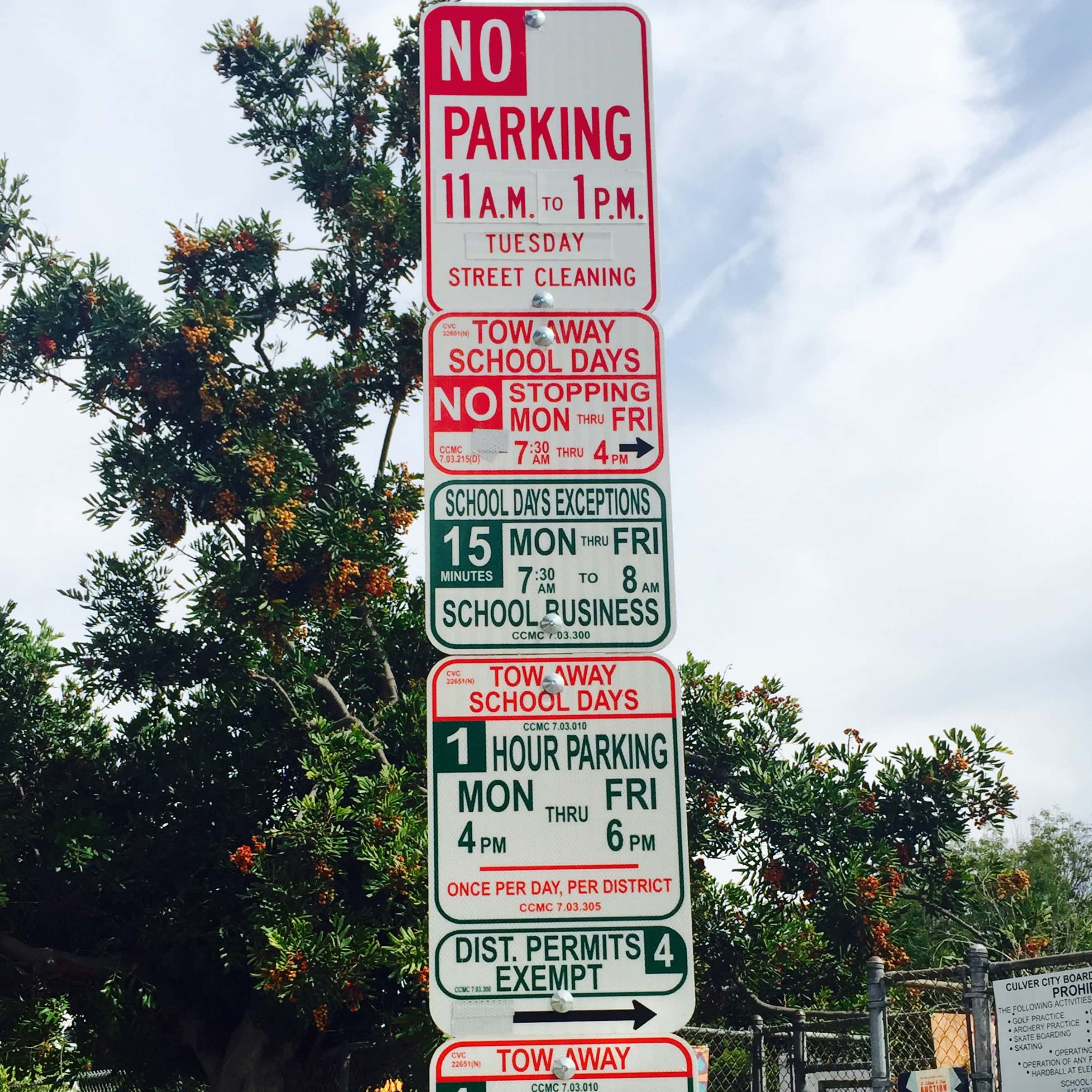
The crosswalks Captcha provides the most difficult cultural discrepancy for me. Some US crosswalks look like European "forbidden for all traffic" road markings. Pretty much the opposite of a crosswalk. I always have to do a double take on those.
As a blind person with english as not native language, the audio captchas are pure hell. I can't imagine other visually impaired people who don't know english at all and have to deal with a lazy website which dumps them the default english audio captcha if there is audio at all.
It always amazes me that we as a society insist on using ambiguous words ("crosswalks" or otherwise) when there is an option to use an unambiguous option.
Google's CAPTCHA is a cancer of the internet. We're all training their AI without any renumeration. I genuinely hope that some government figures out how to sue them. I've sat down for minutes, repeating CAPTCHAs over and over again, just to log in to an account or download something.
At least for humans. It's fairly easy to write a script with current technology even for an average "hacker" to solve them. But on the other hand it's extremely hard, nearly impossible for a person with special needs to complete them. Even for average person solving some of CAPTCHAs is a hassle.
Most of the popular CAPTCHAs services are "robot-friendly" and providers don't care who solves them, they just need data, they don't need to prove you're human.
I hate captchas with a passion so I'll add another anecdote to the mix:
I'm currently staying in SEA and I love gaming cafe culture here. The only problem is that every time I go to one it takes me good 20 minutes to solve all of the captchas to connect to discord, spotify etc. before I can actually enjoy the experience. So often when I only have 2 hours to spare I really don't feel like spending 15% of that time doing slave labour for google for free instead of enjoying the social gaming experience I went there for.
Sure the cafe could be setup better with more IP addresses or something, it's a small niche scenario and there are probably some hacks around it but it shouldn't be this way - it's just so disgusting how the web got hijacked by this nasty invasion.
Unfortunately minority affected don't have big enough voice in this to bring any change.
Captchas have gone mad. The other day a major service gave me less than 10 seconds to solve a puzzle with a mouse in a maze and some cheese, and subsequently locked out of my account.
Actually before I got locked out, I thought I would stand more chance with the alternative for the visually impaired. It jumped straight in to a fuzzy voice reading 20+ numbers at a rate of more than 1 per second. I was already behind on typing them in before it started, and I failed that too.
Its as if solving an unfamiliar problem with fuzzy images/audio (that are increasingly fuzzed beyond the absurd) wasn't mad enough. But now I'm expected to be faster than a computer as well.
not trying to stir up a shitstorm, but since this article mentions IQ tests - "what's a nickel?"...
Check out the history (1971) of Larry P. and California's use of IQ testing in schools.
> As a group, African Americans across the country scored lower on IQ tests. The lawsuit alleged that was because the tests were biased toward Eurocentric culture. Questions like, ”Who wrote Romeo and Juliet,” they argued, didn’t assess a student’s innate capacity to learn. It tested knowledge that some – and not others — had acquired at home or school.
I'm not American and I often see captchas that ask about "cars" or "trucks". And they use similar images. I sometimes don't pass through those. My question is, when I see a truck and I'm being asked to select all cars, should I select the truck or not? For me a truck is a car. Is it not one?
Don't get me started on how infuriating Google's ReCaptchas are on Tor Browser.
Buster captcha solver fails immediately. And when you do actually manually solve the captcha correctly, sometimes Google still thinks you're a robot.
And sometimes it asks me to select all "bicycles" in the images and there are NO GODDAMN BICYCLES in any of the images whatsover. So I hit Skip and eventually google thinks I'm a robot.
Everybody please either switch to hcaptcha or..., although I've not seen a website use this yet, upgrade to ReCaptcha v3 maybe?
I read somewhere that ReCaptcha v3 is far less annoying than v2? Is that true?
I understand the purpose of CAPTCHAs when used as a security measure, but recently it seems like there has been a huge proliferation of them in all sorts of random places and it’s becoming very annoying.
Even Google has taken to occasionally popping up CAPTCHAs just so I can see search results! (“suspicious activity on your network” - I’m using a reputable, top-tier UK mobile provider)
Is there grounds to legally challenge CAPTCHAs on the basis that they’re discriminatory? They must be a nightmare for those using assistive technologies, or who have forms of cognitive impairment.
And frankly, the ones in TFA aren't the worst. I'm familiar with yellow taxis from American films. I'm not familiar with 'crosswalks' (full stop) or American 'fire hydrants'.
Your buses also look somehow different often, and those can be hard. Traffic lights even more so, some are familiar, but some styles I would just never see in the UK, so I actually have to look at each square to check, I can't rely on recognising them.
Then, even once you get past all that, it'll frequently complain you haven't selected them all, and you have to guess which square that doesn't have a bicycle it thinks has a bicycle.
I love searching for very American-looking fire hydrants or pedestrian crossings. Great case of US cultural imperialism - I suspect that the developers didn't even think it might not be the same thing abroad.
Being an African born & bred in Nigeria, I particularly find this appalling. Captcha usually asks users to identify fire hydrants, crosswalks & other objects with design patterns that are not common here, in everyday living. There's a big question on whether these approaches work well for onboarding the next billion users to the internet, especially since the demographics are much different from existing internet users.
Yes, the American focus of the internet is absolutely appalling. Assumptions of timezones - PST, CST and the others whatever they are. Northern hemisphere assumptions of seasons - fall, etc - in the southern hemisphere the seasons are the opposite and we don't use the word fall.
Even Apple, known for its "sensitivity" to cultural matters has a big miss on this one.
What’s more fun is being American and intentionally misinterpreting the captcha. Select all street lights? Then think of how that question could be translated and misread in another language. Then select everything that would qualify as a light on the street: lamps, car headlights, crossing signals, et al.
Sometimes I select a square that I think the machine placed in the set to get more certainty but doesn’t match. For example, “select all chimneys”. If it presents me with an image of a house in the distance that has an object infront/behind it that is not a chimney but due to positioning and image quality it appears to be a chimney I will select it.
Captcha is a game.
- For Alphabet/Google the game is: mine the public for image recognition data so we can automate a car/drone and sell it to said public.
- For me the game is: can I play captcha chess with Google’s AI?
And if Google flags me as a bot, so what? At any point I know that I can quit playing captcha chess by giving it what it wants for a round or two and I’m trusted again.
This reminds me of account security questions. They ask things like "what's your childhood nickname", "what's your first pet's name". To my Chinese mother-in-law, who was born in the middle of the Cultural Revolution, when food was scarce, everyone was poor, education was not easy to get, government was non-functional due to anarchy, and when her first priority was to survive, all those questions are just weird. They reek of first-world assumptions.
I always used to wonder when I see a 'Pie' or other items specific to U.S./Western countries on re-CAPTCHA if people there would get it right if a Masala Dosai/ Idli (Common South Indian food) or Moimoi (Common Nigerian food) is shown.
Also it makes me wonder the success rate of people working in CAPTCHA farms(unfortunately), which I'm positive are not located in Western countries. Perhaps a large print outs of Pie, side walks are hanging on their walls and they just have to get it right couple of times to understand what it is.
P.S. I recently received an CAPTCHA on LinkedIn to identify a 'Spiral Galaxy', although that made me happy, the questions raised about CAPTCHAs seems validated with it.
It often happens with things designed and made in the USA. It is assumed that the terminology or customs of the USA apply to the rest of the world, when it's often not the case.
For example, their bizarre date system. Widespread use of state abbreviations and timezone abbreviations that are only known in the USA. "Zip code" on forms for customers in New Zealand or India or France.
Depends on the part of the USA. We have tons of roundabouts in the part of the USA I live in. Everything from tiny ones on neighborhoods up to huge multi lane ones (though nothing as crazy as some of the ones I’ve seen in Britain).
That might depend on what 'truck' means to you! Is it equivalent to the British 'lorry', or does it include pickup trucks? I'm Australian, and for me 'truck' means 'lorry', pickups are a kind of ute, utes are a kind of car, and so trucks and cars are clearly distinct. (QED!) There seems to be endless room for cross-cultural ambiguity here though.
Those aren't anything like the sort of questions involved in IQ tests. IQ tests rarely involve words at all, usually a series of geometric shapes where you're supposed to pick the next one.
CAPTCHAs being american-centric, ableist, etc are all valid criticisms here, but I think people in tech fail to understand the value of them.
Being "robot-friendly" still doesn't mean it's a walk in the park, and it's a hurdle that spammers will have to account for. If your site is a low value target or the spamming in general is low-value, it's often effective. Running any sort of small time open to the internet blog or forum will make the value of CAPTCHAs abundantly clear. The issue here is being inclusive to people, not making them "work" against robots.
It seems like Google punishing you for taking actions to increase your privacy, which not-so-coincidentally reduces the data they're able to hoover up from you.
Stairs too. Do they include the hand rails? If a step ends three pixels into a new square, do I select that square? What about the side face of the steps?
There was a CTF a while ago where someone beat Google Captcha by simply inputting the Audio captcha into Google speech recognition. It worked ~80% of the time.
The way I learned it, a "car" is any roofed 4+ wheeled vehicle up to van and SUV size (yeah, more Americanisms). Pickup trucks and larger are "trucks".
It's just that the classification gap between human and computer is closing, so now computers are better than a good percentage of humans, which means that there's a chunk of humans that now cannot conclusively prove they aren't bots.
The two I've had trouble with are Traffic Lights and Parking meters.
Some of pictures are the kinda that hang suspended from a cable. We just don't have those in Australia so I tend to miss them.
Not sure I've ever seen a real parking meter. (Just ones in cartoons like the Simpsons). I kept getting mixed up with what was a parking meter and what was too ambiguous to tell. (Like could be intercom or a letter box, they pictures get blurry)
A side quest to yours - when I'm told to select traffic lights - should I include the pieces with just the poles or it's fine to select only the ones with actual lights? I never get through them.
> Questions like [..] didn’t assess a student’s innate capacity to learn
Back in the day, I did a boat-load of tests and passed a boat-load of exams at school and then university. I have a drawer full of certificates from (apparently) respected institutions to prove it.
None of which are any use to me right now.
I can't say that any of the tests or exams I sat actually assessed anything close to my "innate capacity to learn".
Funny you should say that. reCAPTCHA v3 is meant to be invisible, watching the behavior of a user in the background, and then returning a score between 0.0 and 1.0 for the website to do with as they please.
No, the owner of the site is getting a free service from Google to try and prevent bots from using their site. If you don't like CAPTCHAs then your problem is with the site owner, not google.
Editorial Channel
What the content says
+0.90
Article 2Non-Discrimination
High A:Advocacy against discrimination F:Framing design bias as systemic discrimination
Editorial
+0.90
SETL
+0.60
The entire post is a critique of discriminatory CAPTCHA design. Core argument: Google's system discriminates against non-American users by embedding American-centric cultural assumptions. Post advocates for non-discriminatory, inclusive design.
FW Ratio: 57%
Observable Facts
Post title: 'CAPTCHAs don't prove you're human – they prove you're American' — directly naming the discrimination.
Specific discrimination example given: 'Taxis in my country are generally black. I've watched enough movies to know that all of the ones in America are yellow.'
Comments section includes 75+ responses from users in Germany, Czech Republic, Poland, Netherlands, Australia, and other countries describing identical barriers.
Post asks: 'Will Google refuse to believe I'm human simply because I don't know what a Twinkie is?' — questioning fairness of the gatekeeping.
Inferences
The post demonstrates that CAPTCHA design creates systematic barriers for a global majority of users based on cultural origin — a clear discriminatory pattern.
By eliciting diverse international responses, the post proves the discrimination is not anecdotal but structural and widespread.
The post frames this as a design justice issue: systems that claim universality should not embed parochial American assumptions.
+0.80
Article 27Cultural Participation
Medium A:Advocacy for cultural respect F:Framing bias as cultural imperialism
Editorial
+0.80
SETL
+0.49
Post directly critiques cultural imperialism in CAPTCHA design. Argues that systems should respect the diversity of world cultures and not privilege American culture as the universal standard. Advocates for equal recognition of all cultures.
FW Ratio: 57%
Observable Facts
Post title names the problem explicitly: 'they prove you're American' — not universal, but culturally specific.
Post states: 'But in every other country I've visited, taxis have been a mish-mash of different hues. This annoys me.' — framing American centricity as a cultural imposition.
Closing riddle uses British currency (half-a-crown, florin, tanners) to demonstrate arbitrary cultural knowledge requirements.
Comment from a user: 'There are few things more horrifying than watching Americans run around other countries assuming the locals are fully fluent in American slang and completely caught up on American pop culture.' — directly naming cultural imperialism.
Inferences
The post frames CAPTCHA design as a form of digital cultural imperialism that disrespects non-American cultures and knowledge systems.
By inverting the cultural knowledge game (British currency), the author argues that no single culture should be the presumed baseline for universal systems.
The global comment section validates the post's critique: users from diverse cultures report the same discriminatory experience.
+0.70
Article 1Freedom, Equality, Brotherhood
Medium A:Advocacy for equal dignity F:Framing discrimination as dignity violation
Editorial
+0.70
SETL
+0.37
Post advocates that all humans should be treated equally in digital systems regardless of cultural origin, directly supporting Article 1's equality and dignity principle.
FW Ratio: 50%
Observable Facts
Post states: 'Will Google refuse to believe I'm human simply because I don't know what a Twinkie is?' — questioning the fairness of the system.
The closing riddle (half-a-crown, florin, tanners) inverts the cultural knowledge assumption, illustrating the author's point about arbitrary cultural gatekeeping.
Inferences
The post frames CAPTCHA bias as a dignity issue: users are treated as 'less human' if they lack American cultural knowledge.
By inversion (British currency riddle), the author argues that cultural knowledge requirements are arbitrary and disrespectful to non-American users.
+0.70
Article 19Freedom of Expression
Medium A:Advocacy for access to information F:Framing access barriers as freedom restriction
Editorial
+0.70
SETL
+0.26
Post advocates for barrier-free access to online information and services. CAPTCHAs with discriminatory design restrict access to expression and information, violating Article 19's spirit of universal digital participation.
FW Ratio: 60%
Observable Facts
Post describes CAPTCHAs as 'irritating little web tests which is supposed to prove that you are a human' — framing them as access barriers.
A commenter describes being locked out: 'I was forced to switch over to Internet Explorer (ugh!) and prove my humanity with an easier challenge' — demonstrating access denial.
Comments show users struggling to access systems due to the bias: 'I actually failed one of these recently. I gave up after 5 minutes.'
Inferences
The post argues that discriminatory access mechanisms violate the principle of universal access to online information and services.
By highlighting user lock-outs and forced workarounds, the post demonstrates that the system actively restricts some users' ability to participate online.
+0.60
PreamblePreamble
Medium A:Advocacy for universal dignity in digital design
Editorial
+0.60
SETL
+0.24
Post appeals to universal principles of human dignity by arguing all humans deserve equal treatment in digital systems, regardless of cultural background.
FW Ratio: 50%
Observable Facts
The post opens by comparing CAPTCHA bias to cultural bias in standardized IQ tests, both assuming homogeneous cultural knowledge.
The author explicitly states the problem: 'There was no way to get around the cultural knowledge required by the test.'
Inferences
By drawing the IQ test parallel, the post frames CAPTCHA bias as a violation of universal human fairness principles.
The site's diverse theme switcher demonstrates commitment to accessibility as a baseline principle.
+0.60
Article 7Equality Before Law
Medium A:Advocacy for equal treatment in systems F:Framing access barriers as equality violation
Editorial
+0.60
SETL
+0.35
Post argues for equal treatment of all users in digital systems, regardless of cultural background. Challenges the notion that Americans should be treated as the universal baseline.
FW Ratio: 50%
Observable Facts
Post argues that CAPTCHA design treats American cultural knowledge as the universal standard, disadvantaging other users.
Post states: 'We don't have those coins in my country!' — illustrating how the system creates unequal conditions based on user origin.
Inferences
The post frames equal treatment as a design principle: systems should not create arbitrary barriers for some users while treating others as default.
By highlighting the currency/cultural knowledge gap, the post argues for design that doesn't presume a single cultural baseline.
+0.30
Article 26Education
Low F:Framing access as educational equity
Editorial
+0.30
SETL
-0.20
Tangentially relevant: accessible design supports educational participation and access. Discriminatory design barriers limit users' ability to access educational and informational resources online.
FW Ratio: 50%
Observable Facts
Post compares CAPTCHA bias to standardized test bias, a known educational equity issue.
Inferences
The post implies that design discrimination creates barriers to knowledge access, analogous to educational equity problems.
ND
Article 3Life, Liberty, Security
Not directly addressed.
ND
Article 4No Slavery
Not directly addressed.
ND
Article 5No Torture
Not directly addressed.
ND
Article 6Legal Personhood
Not directly addressed.
ND
Article 8Right to Remedy
Not directly addressed.
ND
Article 9No Arbitrary Detention
Not directly addressed.
ND
Article 10Fair Hearing
Not directly addressed.
ND
Article 11Presumption of Innocence
Not directly addressed.
ND
Article 12Privacy
Not directly addressed.
ND
Article 13Freedom of Movement
Not directly addressed.
ND
Article 14Asylum
Not directly addressed.
ND
Article 15Nationality
Not directly addressed.
ND
Article 16Marriage & Family
Not directly addressed.
ND
Article 17Property
Not directly addressed.
ND
Article 18Freedom of Thought
Not directly addressed.
ND
Article 20Assembly & Association
Not directly addressed.
ND
Article 21Political Participation
Not directly addressed.
ND
Article 22Social Security
Not directly addressed.
ND
Article 23Work & Equal Pay
Not directly addressed.
ND
Article 24Rest & Leisure
Not directly addressed.
ND
Article 25Standard of Living
Not directly addressed.
ND
Article 28Social & International Order
Not directly addressed.
ND
Article 29Duties to Community
Not directly addressed.
ND
Article 30No Destruction of Rights
Not directly addressed.
Structural Channel
What the site does
+0.60
Article 19Freedom of Expression
Medium A:Advocacy for access to information F:Framing access barriers as freedom restriction
Structural
+0.60
Context Modifier
ND
SETL
+0.26
Site actively facilitates expression: open comment section, multiple accessibility features, voluntary (not mandatory) barriers to content.
+0.50
PreamblePreamble
Medium A:Advocacy for universal dignity in digital design
Structural
+0.50
Context Modifier
ND
SETL
+0.24
Site structure is non-discriminatory and accessible via multiple theme options, supporting universal access principle.
+0.50
Article 1Freedom, Equality, Brotherhood
Medium A:Advocacy for equal dignity F:Framing discrimination as dignity violation
Structural
+0.50
Context Modifier
ND
SETL
+0.37
Site treats all visitors equally; no discriminatory access or content barriers observed.
+0.50
Article 2Non-Discrimination
High A:Advocacy against discrimination F:Framing design bias as systemic discrimination
Structural
+0.50
Context Modifier
ND
SETL
+0.60
Site does not discriminate; open comments section represents diverse global voices without gatekeeping.
+0.50
Article 27Cultural Participation
Medium A:Advocacy for cultural respect F:Framing bias as cultural imperialism
Structural
+0.50
Context Modifier
ND
SETL
+0.49
Site respects cultural diversity through international commentary and accessibility features supporting varied user contexts.
+0.40
Article 7Equality Before Law
Medium A:Advocacy for equal treatment in systems F:Framing access barriers as equality violation
Structural
+0.40
Context Modifier
ND
SETL
+0.35
Site structure applies equal access rules to all visitors; no preferential treatment by geography or background.
+0.40
Article 26Education
Low F:Framing access as educational equity
Structural
+0.40
Context Modifier
ND
SETL
-0.20
Site supports educational access through multiple theme options and open commentary.
ND
Article 3Life, Liberty, Security
Not directly addressed.
ND
Article 4No Slavery
Not directly addressed.
ND
Article 5No Torture
Not directly addressed.
ND
Article 6Legal Personhood
Not directly addressed.
ND
Article 8Right to Remedy
Not directly addressed.
ND
Article 9No Arbitrary Detention
Not directly addressed.
ND
Article 10Fair Hearing
Not directly addressed.
ND
Article 11Presumption of Innocence
Not directly addressed.
ND
Article 12Privacy
Not directly addressed.
ND
Article 13Freedom of Movement
Not directly addressed.
ND
Article 14Asylum
Not directly addressed.
ND
Article 15Nationality
Not directly addressed.
ND
Article 16Marriage & Family
Not directly addressed.
ND
Article 17Property
Not directly addressed.
ND
Article 18Freedom of Thought
Not directly addressed.
ND
Article 20Assembly & Association
Not directly addressed.
ND
Article 21Political Participation
Not directly addressed.
ND
Article 22Social Security
Not directly addressed.
ND
Article 23Work & Equal Pay
Not directly addressed.
ND
Article 24Rest & Leisure
Not directly addressed.
ND
Article 25Standard of Living
Not directly addressed.
ND
Article 28Social & International Order
Not directly addressed.
ND
Article 29Duties to Community
Not directly addressed.
ND
Article 30No Destruction of Rights
Not directly addressed.
Supplementary Signals
How this content communicates, beyond directional lean. Learn more
Post describes CAPTCHAs as 'irritating' and 'annoying'; uses emotional language to characterize Google's system design.
appeal to fear
Post raises concern: 'Will Google refuse to believe I'm human simply because I don't know what a Twinkie is?' — implies systematic exclusion/discrimination.
build aba2bc8+myve · deployed 2026-02-28 16:36 UTC · evaluated 2026-02-28 16:29:11 UTC
Support HN HRCB
Each evaluation uses real API credits. HN HRCB runs on donations — no ads, no paywalls.
If you find it useful, please consider helping keep it running.