This 2014 resource aggregation champions free access to mathematics education by curating 70+ freely available textbooks and explicitly advocating that making educational materials freely available represents inevitable human progress. The page directly supports UDHR Article 26 (right to education) and Article 22 (social and cultural rights) by removing cost barriers and enabling universal participation in mathematical and scientific knowledge.
This is awesome. At some point in the next five years I plan on taking a sabbatical and focusing almost exclusively on redoing my math education and moving deeper into advanced topics than I did as an undergraduate.
Is there anyone who has done something similar who might share some suggestions for success?
I'll never forget how the math professors would switch from edition x to edition x+1 with the only clearly visible difference being the homework assignment questions.
I truly hope that this is not just a trove of books, but also a signaling of the change in culture from opportunism at the expense of the students to openness.
Sadly, it seems that Professor Cain (the editor of this page) passed away in 2015[1]. The page had disappeared from the gatech.edu servers at one point, and I was afraid that without Professor Cain's presence, it might not ever be restored. Happy to see that it's online again.
If you find it easier to keep at it and learn from lecture videos instead of from textbooks, here's a math curriculum of lecture videos I've curated. This covers calculus, linear algebra, probability, statistics, convex optimization and a math for ML course thrown in for the HN audience:
The AMS is trying its hand at curation as well. The project shifts some of the work onto authors and seems most useful for undergraduate subjects at the moment, but the names behind it should help.
There's a huge ecosystem of open textbooks, and two of my favorite math sources the AIM textbook initiative and the UMN open texts library.
American Institute of Mathematics Open Textbook Initiative --
note that they review the texts too and are a bit picky about what they list: https://aimath.org/textbooks/
More than just math: University of Minnesota open textbook initiative. Stats, CS, and humanities as well: https://open.umn.edu/opentextbooks/
Not a repository, but an individual free/open math text under development -- comments and feedback desired: https://www.softcover.io/read/bf34ea25/math_for_finance It starts with elementary probability and then combines probability and stats with linear algebra, multivariable calculus, and differential equations. Aimed at folks who have seen the math before but need a refresher and a viewpoint that unifies seemingly disparate topics. Note that it uses Softcover, a great way to publish technical texts to several formats at once.
I'm a high school graduate (2016, took a gap year) and I've been lurking on HN for almost a year in my free time. All the folks on here have really piqued my interest for math (I hear terms like category theory and abstract algebra being thrown around) and CS theory. If there's anything I'm thankful for from this community it's this thing. However I cannot bring myself to tackle such topics(because I feel that I'm not armed enough to learn them). How do you think I can overcome that?
I can't comment on the deeper parts of the book, because I don't get it yet (I don't really have the time atm to slog through a 900 page book, as much as I'd love to)
Some of these look pretty good, although the selection is rather limited. For those willing to pay a little to get a bigger selection there is a nice alternative between "free" and the insanity that is the pricing of most textbooks today.
That alternative is the books published or republished by Dover publications. They like to take older textbooks and purchase rights to republish them as relatively inexpensive paperback editions. A very large fraction of their books are under $20, with many under $12. A few are more expensive, but only rarely more than $30.
The level ranges from suitable for high school students to graduate level and beyond.
Don't overlook the "general" subcategory. They have some wonderful problem books there, such as Yaglom and Yaglom's "Challenging Mathematical Problems With Elementary Solutions" series.
They also do this for physics, chemistry, engineering, history, economics, computer science, biology, earth science and more.
God damn it, every time I hear Georgia I thing of the country nearby Russia and then after some time I remember that there is a state in th US which is called the same too.
I'm currently working through Udacity's Self-Driving Car Engineer Nanodegree; if everything goes well, I should be heading into Term 3 soon.
What is painfully known to me, before I started this course and now in the middle of it - is my lack of certain education in mathematics.
Particularly that of stats/probability - but lately understanding the basics of calculus, namely that of derivatives and integrals. So I would like some assistance - namely, what are your suggestions for me to remedy this, after I finish the Nanodegree?
My thoughts have been to take a reprieve from coursework, then maybe next year launch into something more. Maybe more MOOCs or other online course or resources (like these books) geared toward learning this material. Or perhaps taking a course or two at a local community college? Perhaps I could audit a local (ASU West here in Arizona would be closest) mathematics course? Or maybe do some other kind of formal online study (I have considered getting a BS then an MS via an online school).
I seem to do alright with MOOCs "at my own pace" - but I also do well in a more structured system, with a set syllabus, schedule, and testing.
I just want to see what others think might be the best approach, in order to assist my decision in the future. Thank you all for any suggestions and such.
I have quite a few adult readers using my book to refresh and re-learn basic calculus and mechanics. You might consider checking it out[1]. It's not free, but very affordable.
I am a free text author (one of mine is an entry on OP's page). If you want change, here is something you can do.
When you are contacted by the alum reps at your school, GaTech or otherwise, don't ask about the football team. Ask if the faculty are rewarded for writing books that are Free.
People respond to rewards. Said less abstractly, I have been told a lot, often by young folks starting out, that they have a good idea but cannot afford to spend the time on a project that would not be recognized at their institution when they come up for tenure or promotion.
(My institution had the foresight to recognized this kind of work, for which I can only say how great that was of them.)
A good entry point are one of these books which start from the very beginning of math in Egypt/Greece and teach the fundamentals of math through a narrative as humans discovered the various parts:
Of the two I prefered Kline's book but they are both good, albeit a bit heavy on geometery as that was a big focus of early math research.
Another great starting point is "Book of Proofs" and "Introduction to Mathematical Reasoning" to give you a deeper sense of how to approach the subject.
From there I went down this path (the order of which is up to you, each has tons of good source material):
-> Proofs/Logic
-> Algebra
-> Linear Algebra
-> Calculus
-> Abstract Algebra
-> Set Theory
-> Group Theory
-> Category Theory
-> Statistics/Probability
-> Discrete Mathematics
I never did well with learning math in a classroom but I've grown to love math through this process. There are lots of applications in programming as well. It makes approaching the deeper parts of Haskell/FP, data science, and machine learning much more accessible. I particularly liked the higher level Abstract Algebra stuff over the more grinding equations of calculus/linear algebra as it was more similar to programming.
If you have an interest in these topics, you can learn them. If you spend enough time doing something, you will learn it. Everyone has a different number for how long it will take, but depending on your "intelligence" skill level you will eventually grasp the subject.
This feeling that you are not armed for the subject is because there is a lot of dependent information between what you know and subjects like category theory and abstract algebra. Since you just got outta high school, you still have a lot to learn between where you are and where you want to be. Do not let that dissuade you tho, you can learn it, just gotta start.
Both MIT[1] and Stanford[2] have category theory as a graduate level course. I was not a math major but I assume that means you're like 4+ years away from learning this on the college track. Now, do not take that as a personal endorsement for going to college, you do you.
But, you are on hacker news, so I assume you want to learn, Well here is the MIT undergrad pure math major class requirements[3]. Its a good place to start learning an undergrad amount of math, the internet has resources everywhere to learn this stuff, it just takes time. Lots and lots of time.
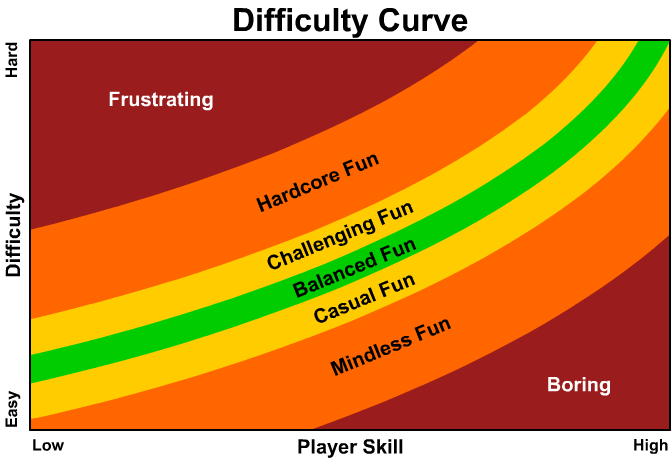
One more tip, there is a trade-off between how hard something is to learn and how quickly you can learn it [4]. Do not over exert yourself too far in the difficult to learn direction, because you will become frustrated. Try and find a spot that is still fun, but not too fun, because then you are not maximizing your learning potential, assuming that is your goal. Learning how to learn can be very helpful, maximize your gains.
Also shout out to Numberphile on Youtube [5]. If you like math, you will like the channel.
My suggestions would be to form study groups and seek out study partners. And if you are willing to take the lead when you meet, you'll learn more through (quasi-)teaching.
MOOCs and books provide the materials but not the motivation or the opportunities for synthesis through verbalization and interaction.
For what it's worth, I'm basically in the midst of a sabbatical in order to study math.
I would first try to learn how to do proofs. I did no math since high school, then started again a few years ago just for fun . All higher level math (upper division and graduate school) is based on being able to read and write proofs. However, you don't need anything above high school algebra to learn proofs, so you don't have to wait, you can just get started now!
My favorite book, that I strongly recommend despite the high price of around $100 in the US is "Mathematical Proofs" by Chartrand.
You can get an international copy off eBay for around $45.
If you're weak on basic algebra etc, then you should instead start with "engineering mathematics" by Stroud, which has a foundations section that I started with several years ago when I started relearning math. It's designed for self-study.
I actually did find it helpful to do classes, I found most of the lower division math classes available online (i.e. calculus 1,2,3 and linear algebra). Sometimes, it helps to have deadlines, exams etc :)
Btw, if anyone out there already has a non math degree, but wants to study upper division and graduate level math formally, it turns out the way that is usually done on the US is to apply to a Math Masters program for "conditional admission" to the masters programs. They admit you, and then you do the upper division undergrad courses first, then move onto the masters programs. It's also possible to sign up for one-off classes at various universities via some kind of "open university" program, which is much easier to get into than formal admission to a degree course- I'm actually starting an Analysis course and a Linear algebra course at Berkeley tomorrow, as part of their "summer session", and you basically just sign up, pay your money, and turn up :)
Feel free to get in touch if anyone has any questions (email in profile)
Steal a copy of a textbook on libgen then read it. Try the exercises, if you can't do them then find out what you need to learn. This certainly works for physics (Obviously don't start with a graduate QED textbook).
I note that slthough it mentions textbooks, it says this:
"They have not been published elsewhere, and, as works in progress, are subject to significant revision."
So I understand the model behind these materials this to be that in the end the goal is to publish with a publisher, not to offer the material for Free download, and that these works are being developed, and welcoming feedback during that process.
I don't believe OP's page has that model. I think OP's page is works that the author considers finished.
What do you want to do with this mathematical knowledge you want to acquire? Learning for the sake of learning is fine, but, like programming and many other big topics, it can be much easier if you have specific goals and motivations.
Personally, I only started to enjoy math when I started hanging out with PhD students (in engineering as I was an engineer). They showed me what you can do with upper level math and that motivated me to learn it. I discovered that most math isn't like high school at all and is way cooler than I imagined.
Upperclassmen scared the bajeezus out of me when I got "Killer" Cain for calculus 3 my freshman year. The stories couldn't have been further from the truth - he was certainly tough, but also a fair, rigorous, and thorough teacher (if perhaps a bit impatient). I didn't realize he had passed...RIP, Dr. Cain.
This is reasonable. Grinds my gears that the IEEE hoards all computer research and wants at-least $15 for a single paper no matter how interesting or inane. http://ieeexplore.ieee.org/document/7942927/
Hey IEEE, you are doing the opposite of a service in a world created by your members. Please cease to exist.
The culture is the same. It is just that professors are now enabled to do something about the textbook problem.
For the most part, professors have to use books that the university bookstore can obtain. Since the publishers were always bumping up the edition, that meant using the new edition. When (and where) I was going to school, most professors would turn a blind eye to students using an old edition. Many would even go as far as supporting students with the old edition. A few would recommend entirely different books if they felt that they were better. I even had one professor who paid students for finding errors in a book that he wrote, even if he knew that the student was using a photocopy of his book.
Very few professors are opportunists and most would prefer an open culture. They are simply stuck with the rules of a system that preys upon students.
I so badly want to do this. I did pretty well in my undergrad math degree, making it through some grad level classes in logic and topology. Then I got a job in business.
Fast forward 15 years and I've forgotten so much that I look at old notebooks and can't understand a fucking thing I wrote back then.
It depresses me to no end.
And I kind of despair that with the obligations I'm locked into right now, it will be nearly impossible to dedicate the time I would need to relearn it all.
I have spent some time with mathematical books from Dover publications and I recommend it to everybody else who is looking for good books on the subject. The contents, selection and cost are all very generous.
Those of us who live in the US have the opposite problem.
(And Georgia the US state has a larger population than Georgia the country. So perhaps this is one of the rare times when our parochialism about the rest of the world is justified.)
I have completed 3 MOOC courses. I was lucky that they tied in with my job.
Editorial Channel
What the content says
+0.90
Article 26Education
High Advocacy Practice Framing
Editorial
+0.90
SETL
+0.30
Content is entirely devoted to advocating for free educational access; reframes education from commodity to public good; explicitly states 'making textbooks freely available on the web is an idea whose time has arrived.'
FW Ratio: 63%
Observable Facts
Page title and content focus entirely on 'Online Mathematics Textbooks'.
Content lists 70+ textbooks with direct hyperlinks, all described as freely available.
Author states: 'The writing of textbooks and making them freely available on the web is an idea whose time has arrived.'
Page identifies cost ('much too big and expensive') as the primary problem being solved.
All textbooks are accessible via direct links without paywalls, registration, or authentication.
Inferences
The page's entire purpose is to enable the right to education by removing cost barriers.
The curator's editorial stance positions free educational access as inevitable progress in human rights.
Platform design supports universal access to quality mathematics education.
+0.60
Article 22Social Security
Medium Advocacy Practice
Editorial
+0.60
SETL
+0.24
Content explicitly advocates for educational access as a social and cultural right by addressing cost barriers.
FW Ratio: 50%
Observable Facts
Content identifies cost ('much too big and expensive') as a barrier to educational access.
Page provides 70+ mathematics textbooks at no cost, directly removing this barrier.
Inferences
The curator explicitly frames free textbooks as solution to educational inequality.
Removing cost barriers enables participation in economic, social, and cultural rights.
+0.50
PreamblePreamble
Medium Framing
Editorial
+0.50
SETL
ND
Content reframes educational access from a commodity ('too big and expensive') to a fundamental right and social good ('whose time has arrived').
FW Ratio: 50%
Observable Facts
Page states 'The writing of textbooks and making them freely available on the web is an idea whose time has arrived.'
Content criticizes textbooks as 'much too big and expensive.'
Inferences
The author frames free educational access as an inevitable and necessary evolution in human rights.
The implicit premise is that expensive textbooks violate principles of universal dignity and freedom.
+0.50
Article 27Cultural Participation
Medium Practice
Editorial
+0.50
SETL
+0.22
Content supports participation in intellectual and scientific culture by providing access to mathematics textbooks.
Author simplifies textbook cost problem: 'expensive to produce and distribute--but this time has passed' implies web publishing solves all issues without discussing implementation challenges.
appeal to authority
Repeated citations of prestigious publishers and institutions (Cambridge University Press, MIT OpenCourseWare, Springer-Verlag) imply institutional endorsement legitimacy.
build aba2bc8+myve · deployed 2026-02-28 16:36 UTC · evaluated 2026-02-28 16:29:11 UTC
Support HN HRCB
Each evaluation uses real API credits. HN HRCB runs on donations — no ads, no paywalls.
If you find it useful, please consider helping keep it running.